
Showing posts with label Tesla. Show all posts
Showing posts with label Tesla. Show all posts
Monday, May 14, 2012
Tesla Time!
Do you, Gentle Reader, want to learn more about Nikola Tesla, the man who discovered the earth's resonant frequency and created ball lightening in his labratory like a contenstant from a two-player Ninendo fighting game? Check out this article by The Oatmeal on just how much Tesla invented.

Monday, October 24, 2011
Shocking
Mention has been made of Nikola Tesla, who is, quite possibly, one of the only real mad scientists to exist. How did he get his start? With cats!
Even though, later in life, Tesla spoke to pigeons, he grew up with cats and when petting his family cat, got shocked. He became interested in electricity and eventually made a 130 foot bolt of lightening from one of his Tesla coils and potentially invented a "Teleforce Beam" which shot ball lightening at 60 million volts.
Truly electrifying research, wouldn't you agree?
Even though, later in life, Tesla spoke to pigeons, he grew up with cats and when petting his family cat, got shocked. He became interested in electricity and eventually made a 130 foot bolt of lightening from one of his Tesla coils and potentially invented a "Teleforce Beam" which shot ball lightening at 60 million volts.
Truly electrifying research, wouldn't you agree?
Sunday, September 18, 2011
Why We Like Edison over Tesla
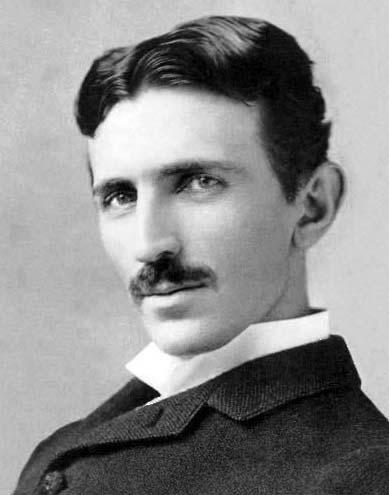
As the Amateur Historian is an Amateur and an Historian, not any sort of scientist, she cannot tell you excatly what the difference is between Tesla's alternating electric current and Edison's direct current. Presumably the names and who discovered them? At any rate, Edison was feircely jealous of Tesla after Tesla supplied the electricity to the Wrold's Columbian Exposition at the World's Fair.
Edison reacted by electrocuting stray puppies with alternating electric current. His hypothesis that large amounts of electricity would indeed kill those it came in contact with was correct. As the public did not entirely understand alternating current (the Amateur Historian completely understands), public opinion turned against Tesla (though they did not stop using alternating current). It did not help that Telsa had mental and social problems and was afraid of round objects.
So basically, we like Thomas Edison for inventing a lot of things, but also for electrocuting elephants. It is a proud day for humanity, I am sure.
Tuesday, July 26, 2011
Shake it, shake it, shake it like a Tesla Oscillator
Many times has an older relation or land-lady complained that a younger person has been playing their music so loudly/otherwise do something believably anti-social they would bring the house down. This hyperbole has mostly passed into cliche, save when one adds Nikola Tesla to the mix.
Nikola Tesla, possibly the world's only real mad scientist, was Edison's rival and a multi-talented scientist. Though Tesla is famous for his alternating current electricity, which is still in use today, he also experimented with mechanical devices. One was an earthquake which, you guessed it, Gentle Reader, causes earthquakes. The machine uses resonance frequency to shake buildings and the earth. Though MythBusters says it is only a legend, Tesla allegedly caused a small earthquake in his lodging house and had to take a sledgehammer to his device before the police arrived.
I am sure it put the whole neighborhood into a quake thereafter.
Nikola Tesla, possibly the world's only real mad scientist, was Edison's rival and a multi-talented scientist. Though Tesla is famous for his alternating current electricity, which is still in use today, he also experimented with mechanical devices. One was an earthquake which, you guessed it, Gentle Reader, causes earthquakes. The machine uses resonance frequency to shake buildings and the earth. Though MythBusters says it is only a legend, Tesla allegedly caused a small earthquake in his lodging house and had to take a sledgehammer to his device before the police arrived.
I am sure it put the whole neighborhood into a quake thereafter.
Friday, June 3, 2011
The Prestige Review
Hello, Gentle Readers! The Amateur Historian has not reviewed anything pertaining to the time period mentioned in the header for a while, and so recently rented Christopher Nolan's The Prestige. This film, staring Hugh Jackman and Christian Bale as rival magicians during the end of the 19th century, in London, is a spooky, but stunning look at stage magic that somehow turns into a distrubing sci-fi story about a magician abusing the scientific powers of Nicola Tesla.
... yes, Gentle Reader, you read that correctly.
Now, from an aesthetic standpoint, the Amateur Historian beileves that one really cannot go wrong with any story that involves Hugh Jackman in period attire and yet... hm. Gentle Readers should be warned that the film is extremely bloody. One realizes that there is a great deal of danger involved in near-death escapes, but one does not really internalize it. The main conflict between the two magicians, Robert Angier (played by Hugh Jackman) and Alfred Borden, (played by Christian Bale) begins when the two work as audience plants for another magician's show. Angier's wife plays the pretty assistant to the magician, you know, the one who is generally sawed in half, or dropped into a tank of water with her arms and legs tied up. Unfortunately, due to Bordon, the tank of water trick ends in very violent tragedy, and, in a show of machismo, revenge and I think pathological obession, Angier and Borden keep trying to one-up each other to increasingly dangerous ends.
Theeeeeeeeeeeeeeeeeeen the movie gets weird.
Perviously, Angier had worked with Michael Caine's character to come up with tricks, but, after recieving a mysterious clue on how to do the "Disappearing Man" trick, he jaunts off to the US to meet with, you guessed it, NICOLA TESLA.
I have nothing against Tesla, and I think the choice of David Bowie to play Tesla was nothing short of genius, but seriously, electricity can only do so much. I don't know if it was part of the book orginally, but I somehow doubt if electricity, wether AC or DC can clone hats, cats or Wolverines. Apparently it does. Who knew? Maybe Edison had something on Tesla being a danger to society.
The main problem with the film is that it veers off genre without any real set-up for it. It appears to be a very bloody look at the end of century, Alaistar Crowley sort of magic, where the veneer of civilization is but a veneer, and the darkness and wolfish nature of man is always rearing its Lockean head to show us we are rather nasty brutes after all. Then it turns out to be about clones.
Yeah.
The other problem is the Amateur Historian's own sense of aesthetics. The Amateur Historican has never been one for the gothic, prefers Austen to Bronte, and Voltaire to Locke. Thus, a film that takes the view of a brutish humanity is not likely to please. However, if one enjoys horror, or enjoyed the film Gothic in an unironic manner, one is likely to enjoy this film.
... yes, Gentle Reader, you read that correctly.
Now, from an aesthetic standpoint, the Amateur Historian beileves that one really cannot go wrong with any story that involves Hugh Jackman in period attire and yet... hm. Gentle Readers should be warned that the film is extremely bloody. One realizes that there is a great deal of danger involved in near-death escapes, but one does not really internalize it. The main conflict between the two magicians, Robert Angier (played by Hugh Jackman) and Alfred Borden, (played by Christian Bale) begins when the two work as audience plants for another magician's show. Angier's wife plays the pretty assistant to the magician, you know, the one who is generally sawed in half, or dropped into a tank of water with her arms and legs tied up. Unfortunately, due to Bordon, the tank of water trick ends in very violent tragedy, and, in a show of machismo, revenge and I think pathological obession, Angier and Borden keep trying to one-up each other to increasingly dangerous ends.
Theeeeeeeeeeeeeeeeeeen the movie gets weird.
Perviously, Angier had worked with Michael Caine's character to come up with tricks, but, after recieving a mysterious clue on how to do the "Disappearing Man" trick, he jaunts off to the US to meet with, you guessed it, NICOLA TESLA.
I have nothing against Tesla, and I think the choice of David Bowie to play Tesla was nothing short of genius, but seriously, electricity can only do so much. I don't know if it was part of the book orginally, but I somehow doubt if electricity, wether AC or DC can clone hats, cats or Wolverines. Apparently it does. Who knew? Maybe Edison had something on Tesla being a danger to society.
The main problem with the film is that it veers off genre without any real set-up for it. It appears to be a very bloody look at the end of century, Alaistar Crowley sort of magic, where the veneer of civilization is but a veneer, and the darkness and wolfish nature of man is always rearing its Lockean head to show us we are rather nasty brutes after all. Then it turns out to be about clones.
Yeah.
The other problem is the Amateur Historian's own sense of aesthetics. The Amateur Historican has never been one for the gothic, prefers Austen to Bronte, and Voltaire to Locke. Thus, a film that takes the view of a brutish humanity is not likely to please. However, if one enjoys horror, or enjoyed the film Gothic in an unironic manner, one is likely to enjoy this film.
Subscribe to:
Posts (Atom)