Showing posts with label art. Show all posts

Wednesday, February 29, 2012

Revved up for ART


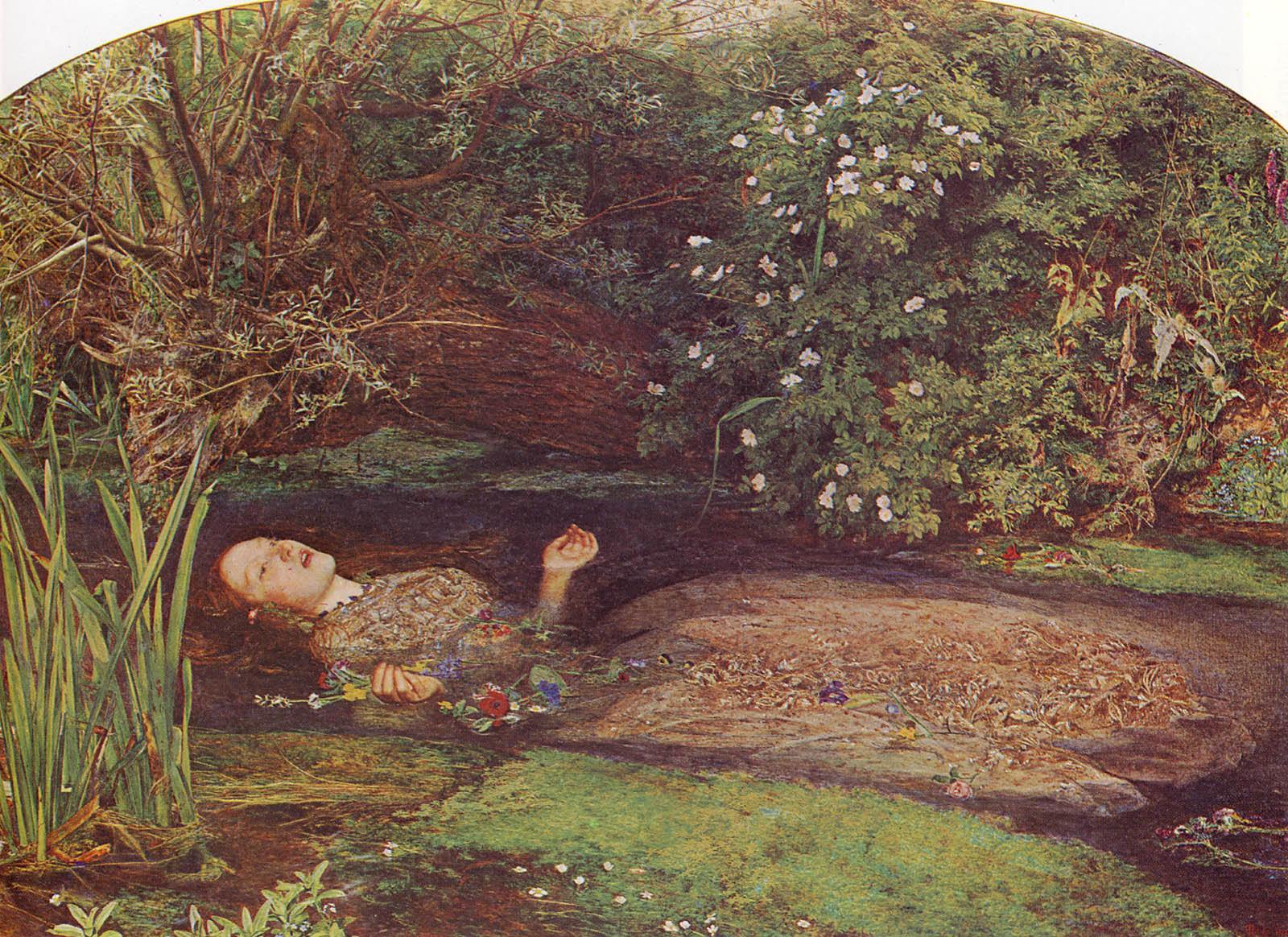
The Amateur Historian's favorite artist, outside of the Regency period, is John Everett Millais, whose breath-taking attention to detail (Millais encoded a world of meaning in the remarkable number of flowers he painted into Ophelia's riverbank, above- for example, in the Victorian language of flowers, red poppies represent sleep and death) never fails to please her.

Millais himself was, to the Amateur Historian's mind, extremely endearing. When he was working on a canvas, he would get so worked up he liked to jog around the room before greeting a visitor... and then make the visitor hold his or her arm up so that Millais had the pleasure of jumping over it.

Saturday, September 11, 2010

La Jaconde


On the subject of Napoleon and Josephine's boudoir, once Napoleon became First Counsol, he and Josephine moved to the Tuileries palace. Josephine did not like their lodgings, first of all because she felt haunted by the spirit of Marie Antoinette, and second of all, because she objected to Napoleon's sense of interior decoration.

That is to say, Napoleon had hung the Mona Lisa in their bedroom and Josephine got extremely jealous of the painting and had him move it- first to his bathroom and then to the Louvre, where it hangs to this day, amid all the other bits of cultural patrimony Napoleon took from other parts of Europe and neglected to give back once he was deposed.

Monday, August 30, 2010

At least no one guessed a platypus

Continuing with the same topic of Millais's Ophelia, there was, at one point, a water vole in the upper corner of the painting. Herein is a brief history of this mysterious aquatic mammal:

October 28th. My man, Young, brought me a rat after breakfast. Began painting it swimming when the governor [his father] made his appearance, bringing money, and sat with me whilst at work. After four hours rat looked exactly like a drowned kitten.

October 29th. Cleaned out the rat, which looked like a lion, and enlarged picture.

November 6th. Beautiful morning; much warmer than yesterday. Was advised by Hunt to paint the rat, but felt disinclined. After much inward argument took the large box containing Ophelia's background out beside Hunt, who again was to paint the sheep. By lunch time had nearly finished rat most successfully.

November 7th. After breakfast examined the rat. From some doubtful feeling as to its perfect portraiture determined to retouch it. Young made his appearance, with another rat, and (for Hunt) a new canvas from the carrier at Kingston. Worked very carefully at the rat, and finally succeeded to my own and everyone's taste.

December 4th. Hunt's uncle and aunt came, both of whom understood most gratifyingly every object except my water-rat, which the male relation (when invited to guess at it) eagerly pronounced to be a hare. Perceiving by our smile that he had made a mistake, a rabbit was next hazarded, after which I have a faint recollection of a dog or cat being mentioned by the spouse, who had brought with her a sponge-cake and bottle of sherry, of which we partook at luncheon. Mutual success and unblemished happiness was whispered over the wine, soon after which they departed in a pony-chaise. Laughed greatly over the day, H. and self.

Deciding that he did not like the particular ambiguity of his water rat, Millais eventually erased it entirely.

Tuesday, March 3, 2009

Oh, for a pound of flesh!

The actress Elizabeth Farren is one of the Amateur Historian's personal favorite celebrities of the late 18th century, though there is little written about said actress and little justification for the Amateur Historian's interest besides the portrait by Sir Thomas Lawrence, to the right, and the Amateur Historian's own personal admiration of elegance in all forms, whether in speech or in person. Vapid, mayhap, but it brings yet another funny portrait story.

Sir Thomas Lawrence was 21 when he painted this, one of his most famous portraits. Note the almost reckless elegance of the brushstrokes, the fine portrayal of the different types of fabrics, the fact that Miss Farren is moving towards the center of the canvas, giving an impression of energy and movement, and the fact that the horizon is so low, making Miss Farren dominate the scene. The portrait was hailed as a success by everyone save Miss Farren herself.


As she wrote to Sir Thomas Lawrence: "You will think me the most troublesome of all human beings, but, indeed, it is not my own fault; they tease me to death about this picture, and insist upon my writing to you. One says it is so thin in the figure that you might blow it away; another, that it looks broke in the middle. In short, you must make it a little fatter, at all events diminish the bend you are so attached to, even it if makes the picture look ill, for the owner of it is quite distressed about it at present. I am shocked to tease you, and dare-say you wish me and the portrait in the fire; but as it was impossible to appease the cries of my friends, I must beg you to excuse me."

Sir Thomas did not and, in fact, titled his portrait "Portrait of an Actress" (further upsetting Miss Ferrars, as "actress" held all the associations of disreputability and high-class prostitution) and upped his asking price from sixty guineas to one-hundred. Miss Farren advised her platonic beau and later husband, the Earl of Derby (and inventor of the eponymous horse-race) not to buy it.

Fortunately for us, the Earl bought it anyways.