Friday, August 28, 2009

Canning, How Could You?

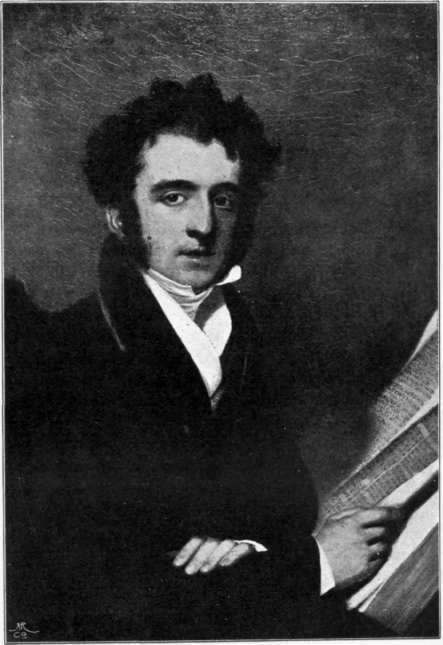
Pitt was naturally reserved and called himself "the shyest man alive", so he spent a great deal of time listening to speeches made in the House or in the committees without saying a word or allowing the speaker to approach him. Though this annoyed the House and the committees, it allowed Pitt to display his remarkable capacity for spotting political talent. Of the hundreds of MPs Pitt convinced to either join Parliament to begin with, or to vote along with Pitt's policies, there were two future Prime Ministers and five future Cabinet Ministers. Pitt's ministry in the 1790s even included four of the five Prime Ministers that would take up office after Pitt had left it.


Of course, Pitt focused almost solely on political accumen and not personality. He was not inclined to expand his social circle, he disliked having to meet new people and be friendly to them and resented any intrusion of his privacy by people he a. did not know or b. did not wish to know better. One of these people was George Canning, who, after being discovered by Pitt, developed a devotion to the Prime Minister that bordered on fanatical. Pitt eventually warmed to him, but it took several years for Pitt to consider him a friend, and Pitt was occasionally thrown by Canning's enthusiasm.

At one point, Canning did the unthinkable and touched Pitt on the shoulder in the House of Commons. The other MPs were shocked, Pitt was alarmed and Canning was forced to defend himself in his journal:

"Once I was seen, when I wanted to speak with him, and he was looking another way, to put my hand on his shoulder. How can you conceive a more silly thing to trouble people's heads than this? ... I know indeed that I have, with people whom I like, old or young, great or small, something of a caressing manner... and so have a great many other people--a great many have it not... they consider Mr. Pitt, naturally enough, as one of the latter class, the non-shakers--whereas he is in fact a very hearty, salutation-giving, shake hands sort of person--and one therefore whom I feel it is natural to take by the arm, or to touch upon the shoulder even (which is the great offence)... But if it be wrong it must be altered."

Pitt made it clear that it must be altered and Canning did not touch him on the shoulder again.

Thursday, August 27, 2009

On Parliament

On visiting Parliament, by Carl Moritz:

"I was much shocked by the open abuse which Members of Parliament fling at each other... they enter the house in greatcoats, boots and spurs! It is not unusual to see a member stretched out on one of the benches while the rest are in debate. One Member may be cracking nuts, another eating an orange or whatever fruit may be in season; they are constantly going in and out... whenever one of them speaks badly or the matter of his speech lacks interest for the majority, the noise and laughter are such that the Member can hardly hear his own words."

This seems to be entirely accurate. Edmund Burke, today regarded as one of the best speech-makers of the 18th century, was violently hated in Parliament. The other MPs nicknamed him 'dinner bell' because when he got up to speak, everyone left.

Wednesday, August 26, 2009

Charles Ain't a Lamb After All


Coleridge was very fond of sentimental friendships, and, in fact, wrote several poems to those who were on the recieving end of his effusions of Romantic feeling. This, however, backfired when it came to Charles Lamb. In This Lime-Tree Bower My Prison, Coleridge describes all the wonderful things his friends (William Wordsworth, Dorothy Wordsworth, and Charles Lamb) were out seeing on their walk while Coleridge had to sit alone in the garden with a burnt foot.

They, being alive to the wonders of nature, appreciated the countryside, but Coleridge was sure that the one who appreciated it the most was, his "gentle-hearted Charles!"

Charles may have appreciated nature, but he did not appreciate the epithet. He later wrote to Coleridge, "For God's sake (I never was more serious), don't make me ridiculous any more by terming me gentle-hearted in print, or do it in better verses."

Friday, August 21, 2009

How Un-Bearable


Though Lord Byron was a cad who, according to popular report "had natural relations with his sister and unnatural relations with his wife", was nevertheless a very good friend.

In school, even though he had a club foot and no money and was therefore bullied himself, he once tried to defend a friend of his against a bully. Said bully scoffed and told him to bugger off. Lord Byron switched tactics and asked him how many lashings said bully was going to give to his friend.

"Why?" asked the bully.

"So that I may have half the beatings," quoth Byron.

Once up at Cambridge, Byron bought a tame bear, at which point, bullies decided they would much rather pick on students who did not have tame bears living in their dorm rooms. The Amateur Historian does not quite know why the teachers allowed this, but presumably, they did not want to have to address their arguments to the bear in question.

Friday, August 14, 2009

Presumably not with your parents

The Amateur Historian apologizes for the break in regular postings, Gentle Readers and begs your indulgence for this summer slackness. She has been going on vacation, a pastime which many Romantic writers were similarly addicted, when they could a. get the money and b. refrain from spending it all on opium.

One such traveler was Charles Lamb, an essayist who, alas, stuck for cash, was one day forced to tour a graveyard in lieu of Southern Italy. Granted, his parents were buried there, and he writes that he, "prostrated [himself] before the spot... kissed the earth that covered them [and]... contemplated, with gloomy delight, the time [he] should mingle his dust with theirs."

This fit of histrionics over, Lamb looked around at the rest of the graveyard and, since he did not think to bring other reading material with him, began reading the tombstones and epitaphs. After passing some time in engraved twee reminiscences about the dead, Lamb turned to his sister and asked, "Where are all the bad people buried?"

Monday, August 3, 2009

Well, you just can't leave an ensemble incomplete....

As has been mentioned before, warfare is no reason to be impolite, and piracy isn't either, at least not in 18th century society.

Captain Benjamin Hornigold's tenure as a scourge of the seven seas lasted from 1715 to 1718, at which point his crew decided that they were not too keen on his never attacking an orphan (actually, never attacking a ship flying a British flag) and his second-in-command, Edward Teach took over. Captain Hornigold does not appear to have been a particularly threatening pirate either.

During one particular attack, Hornigold boarded the ship and, apologetically, asked the crew of the attacked ship for their hats. Captain Hornigold and his crew had overindulged the previous evening and tossed their hats overboard in an excess of drunken merriment. Once Captain Hornigold had recieved the hats, he thanked the crew and sailed away at once.

Sunday, August 2, 2009

Madame Tallien


Speaking of Incroyables, the female counterparts, the merveilleuses, were led by the scandelous Theresa Tallien. Since her husband led the Thermidorian reaction that overthrew the Jacobin control of the National Assembly and installed the five-man Directorate, and since she was the lover of one of the Directors, Paul Barras, she was considered to be the It Girl of her day.

She particularly liked to push fashion to the very limit and turned the Neo-Greek and Roman fashions that had gained popularity under the French Republic into fun but frivolous pieces, made in see-through muslins and worn without petticoats (gasp!). Madame Tallien once appeared at the Paris Opera wearing absolutely nothing but a white silk dress. Talleyrand, after admiring her for a few minutes, remarked, "It is not possible to exhibit oneself more sumptuously!"
Considering that, a few weeks before, Madame Tallien had wagered that her earrings weighed more than all her clothes, immediately proved it in public and won, the Amateur Historian is inclined to agree.

Tuesday, July 28, 2009

Taking a Leaf out of Frederick William I's Book....


Yesterday was 9 Thermidor, when the Jacobins were overthrown, the Reign of Terror ended and the White Terror began. The White Terror is an oddly unknown historical movement during the Thermidorian Reaction, where monarchists and counter-revolutionaries continued on the Terror, only focused it on a. Jacobins, b. anyone who disagreed with the new government (the quickly corrupted Directory, whose political disorganization, economic screw-ups and general inefficacy paved the way for Bonaparte's take-over), c. the peasants, and d. the government of Paris.

Frankly, it was not very funny.

However, some of the disaffected youth who joined the movement were. Gone were the ardent revolutionaries who read Rousseau and Voltaire, who debated the sources of political legitimacy and jumped up on cafe tables to proselytize. The new group, the jeunesse dorée/the Muscadins/the Incroyables, were basically a roving group of angry fops in knee-breeches, exaggerated frock coats, collars so high one would today assume they were wearing neck braces, and powdered hair cut short to emulate the haircut given to a condemned person by the executioner.

To be very basic, the Jacobins had been working to what Robespierre called "the republic of virtue", so those whom the Jacobins considered to be the enemies of France/the republic of virtue decided to reject everything that the Jacobins had proposed (except the guillotining of political opponents). Ergo, virtue of all kinds was considered rather passé so, even though France, who was still entirely without trading partners or easy access to its colonies, was in the middle of a severe famine. They also decided that actually paying attention to political issues was a waste of time, as, to top an otherwise monarchist ensemble, they also wore their powdered hair as several revolutionaries did, with most pulled back in a queue, and a lock of hair on either side of the face. Similarly, they wore cravats with prints on them, which were working-class and generally showed that one supported the sans-culottes.

Thus armed, these gentlemen ran wild in the streets of Paris, drinking very load toasts to the monarchy in front of angry, starving sans-culottes, and beating people up with sticks.

The Amateur Historian believes that the disaffected youth just wanted to beat people up with sticks. The outfits were just an excuse. That, or the collars helped when the sans-culottes, hardened from years of work, grabbed the sticks from the idle members of the aristocracy and beat them up in return.

Saturday, July 18, 2009

Too Bad He Didn't Have the Holy Hand Grenade....


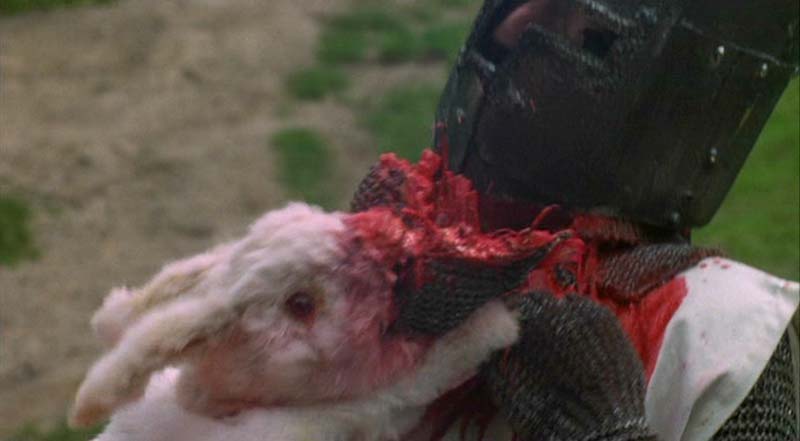
After the 1807 Peace of Tilsit, Napoleon decided to relax by having a hunting party for the court and, to that end, asking his scarily efficient chief-of-staff, Alexandre Berthier, to organize a rabbit hunt.

Berthier, in charge of one of the most organized and effective armies in Europe, attacked this request with his usual foresight and planning, even bringing in hundreds of rabbits should nature prove so monstrously disobliging as to fail to uphold its end, hunting-wise.

Unfortunately, Berthier proved to be too good at making the rabbit hunt entertaining. As soon as the Emperor arrived, the keepers released the rabbits and the lepine horde rushed straight at Napoleon. The freaked-our generals of the court immediately formed a skirmish line to protect the Emperor, but the rabbits somehow had a better grasp of Napoleonic strategy than Napoleon's generals and, dividing into two wings, poured around the flanks of the skirmish line.


Napoleon had to run for his carriage, but the rabbits pursued and the Emperor had to physically toss rabbits out of the imperial coach. Rabbits apparently kept flying out of the windows as the coach drove off.

Later on, Berthier discovered that he had accidentally bought a horde of domesticated rabbits who assumed the gentleman walking towards them was their feeder, not the Emperor of France and the Conqueror of Europe.

Thursday, July 16, 2009

Desmoulins later shared a cordial antipathy with the prettiest member of the French Revolution, Louis Saint-Just. Saint-Just was fond of the very stiff, high collars than in fashion and was also very cold and austere, in a manner that did not endear him to Desmoulins. Desmoulins is said to have said of Saint-Just, "He carries his head like the Holy Sacrament."

"And I," Saint-Just, not to be outdone, is said to have replied, "will make him carry his head like Saint-Denis."

Ouch.

Literally.