Sunday, October 3, 2010

Gee, You Shouldn't Have


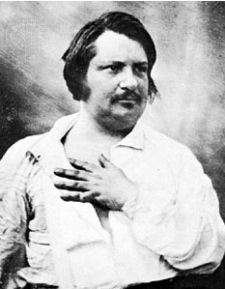
To continue on in our exploration of Balzac, his mother had a very ambivalent relationship with him, eventually prefering his brother, the product of an illict affair with a local landowner, to her first-born, the Coffee Addict.

At least she did have some sense of who her son was, as, when she drew up her will in the cholera epidemic of 1830, she left everything to her son-born-of-adultery... save a small coffee pot, which she left to Balzac.

Thursday, September 30, 2010

I bet he would be great at NaNoWriMo


Balzac's amazing productivity has other sources besides copious quantities of caffine. It seems to be attributed to a. a lot of debts, b. the necessity of making more money and c. self-will.

In an interesting combination of tthe three, Balzac was once called to court, having recieved several advances on a novel that was due two months ago. He was charged and his extremely angry editor demanded a novel within twenty-four hours.

Balzac managed to extend his sentance to twenty-four days, filled said days with coffee and had a finished novel in twenty.

(He did, however, lock himself in a room for twenty-four hours with nothing besides his writing supplies, coffee and a chamberpot and produced a short story. The Amateur Historian would like to profess her total lack of surprise that Balzac had heart troubles later in life and eventually died of a heart attack.)

Wednesday, September 29, 2010

Coffee Coffee Buzz Buzz

I have, in the past, provided a list of guidelines to becoming a romantic poet. Now, Gentle Reader, I can just hear your protestations: "That's all well and good, but I prefer the novel!"

But of course, Gentle Reader! If you want to be a prolific Romantic novelist (well technically realist), try Balzac's routine:

1. Go to bed at 6pm.
2. Wake up at 1 am. Have coffee.
3. Write until 8am, at which point have more coffee, followed by a garganutuan meal of a consomme, steak, a salad, a desert and more coffee.
4. Write/correct printer's proofs/attend to extensive corespondance until 4pm. Have coffee.
5. Visit with friends until 6pm, then eat again and go to sleep.

The real secret to this success, however, is the fifty cups of coffee Balzac consumed every day. In fact,his first debt was to a servant at his boarding school, for coffee and sugar.

In short, Gentle Reader, coffee is the opium of novelists. Better go dig out those Starbuck's gift cards!

Wednesday, September 22, 2010

Certain Regal Noncomformities

The Amateur Historian is a great admirer of the play The Madness of George III, which became the excellent (if somewhat horrifying, when one sees the medical treatments in vogue in the eighteenth century) film The Madness of King George. The playwright, Alan Bennet, said that one of the reasons he chose to write about George III was because he liked his sense of humor and offers this example.

One day during the king's illness, the king's equerry, Manners, saw that His Majesty had decided to hide underneath a couch in lieu of waiting for his dinner. With perfect composure, Manners set a place on the floor in front of the couch, bowed and began to walk out backwards.

The king, still under the couch, replied, "That was very good... manners."

Saturday, September 11, 2010

La Jaconde


On the subject of Napoleon and Josephine's boudoir, once Napoleon became First Counsol, he and Josephine moved to the Tuileries palace. Josephine did not like their lodgings, first of all because she felt haunted by the spirit of Marie Antoinette, and second of all, because she objected to Napoleon's sense of interior decoration.

That is to say, Napoleon had hung the Mona Lisa in their bedroom and Josephine got extremely jealous of the painting and had him move it- first to his bathroom and then to the Louvre, where it hangs to this day, amid all the other bits of cultural patrimony Napoleon took from other parts of Europe and neglected to give back once he was deposed.

Friday, September 10, 2010

om nom nom Napoleon


Lap dogs were common accessories for both men and women in the latter half of the eighteenth and the early part of the nineteenth century. In fact, when strolling through a gallery of eighteenth century portraits, one often begins to think that we have spent the last two hundred years in the perfection of the pug.

Pugs were also a favorite of the Empress Josephine. Before she married one Napoleon Bonaparte, she had a pug named Fortuné, with whom Napoleon did not get along. Fortuné returned the compliment in full and, on Josephine and Napoleon's wedding night, bit the future emperor in the calf.

It is rumored that once Josephine became Empress of the French, she sent messages to her husband by hiding them under Fortuné's collar. One would hope that Fortuné still did not have its particular taste for greatness.

Monday, August 30, 2010

At least no one guessed a platypus

Continuing with the same topic of Millais's Ophelia, there was, at one point, a water vole in the upper corner of the painting. Herein is a brief history of this mysterious aquatic mammal:

October 28th. My man, Young, brought me a rat after breakfast. Began painting it swimming when the governor [his father] made his appearance, bringing money, and sat with me whilst at work. After four hours rat looked exactly like a drowned kitten.

October 29th. Cleaned out the rat, which looked like a lion, and enlarged picture.

November 6th. Beautiful morning; much warmer than yesterday. Was advised by Hunt to paint the rat, but felt disinclined. After much inward argument took the large box containing Ophelia's background out beside Hunt, who again was to paint the sheep. By lunch time had nearly finished rat most successfully.

November 7th. After breakfast examined the rat. From some doubtful feeling as to its perfect portraiture determined to retouch it. Young made his appearance, with another rat, and (for Hunt) a new canvas from the carrier at Kingston. Worked very carefully at the rat, and finally succeeded to my own and everyone's taste.

December 4th. Hunt's uncle and aunt came, both of whom understood most gratifyingly every object except my water-rat, which the male relation (when invited to guess at it) eagerly pronounced to be a hare. Perceiving by our smile that he had made a mistake, a rabbit was next hazarded, after which I have a faint recollection of a dog or cat being mentioned by the spouse, who had brought with her a sponge-cake and bottle of sherry, of which we partook at luncheon. Mutual success and unblemished happiness was whispered over the wine, soon after which they departed in a pony-chaise. Laughed greatly over the day, H. and self.

Deciding that he did not like the particular ambiguity of his water rat, Millais eventually erased it entirely.


Saturday, August 21, 2010

Feed the Birds

Though it is more usually said that to feed the birds, one can pay tuppance a bag, the French musician Berlioz had a more unusual practice.

Berlioz first arrived in Paris as a medical student, a profession he rather famously detested, to the point of defenestration, the first time he had a dissection lab. However, he was forced back into the lab and, though he worked with the windows open, he did not jump out any of them. Instead, he watched the sparrows that flew through and fed them bits of dissected lung.

Yum.

Thursday, July 22, 2010

Fop 'til you drop!

The Amateur Historian devotes a not inconsiderable portion of her life trying to find absurd videos on youtube and has found, yet again, one of the more... bizarre contemporary interpretations of eighteenth century culture.

Gentle Readers, I present to you, Prince Poppycock:

Tuesday, July 20, 2010

Really Giving Her an Earful


Vincent van Gogh's missing ear is a subject of much amusement and bemusement. According to popular rumor, van Gogh cut off his ear in the city of Arles, in Provence, as a gift to a lady of negotiable affection who did not take an interest in him. The people of Arles- particularly the gendarmerie, the local police force- like to point out that the records show a different story.

the artist Gauguin was paying a visit to M. van Gogh, when the later became extremely violent, threatened to kill Gauguin and accidentally cut off his own ear. Gaughin left Arles, and M. van Gogh, in his drunken state, decided that the best thing to do was to wander outside, give his ear to the first prostitute he saw in a nearby brothel, then pass out in his own blood in his room.

It is little wonder why the people of Arles only really liked M. van Gogh once he left them.