Showing posts with label Romanticism. Show all posts

Thursday, October 13, 2011

Heeeeeeeere's Johnny! Keats!

No one hates an author more than another author, particularly if they are authors in the same time period. (Fenimore Cooper's Literary Offenses come to mind), but few can be as sneering in prose as Lord Byron:


Lord Byron on John Keats (1820)
“Here are Johnny Keats’ piss-a-bed poetry, and three novels by God knows whom… No more Keats, I entreat: flay him alive; if some of you don’t I must skin him myself: there is no bearing the drivelling idiotism of the Mankin.”

Saturday, October 8, 2011

What stinks of brooding?

For those Gentle Readers who have not yet seen the delightful parody of Wuthering Heights by Kate Beaton, the Amateur Historian suggests going here and here.

Sunday, October 3, 2010

Gee, You Shouldn't Have


To continue on in our exploration of Balzac, his mother had a very ambivalent relationship with him, eventually prefering his brother, the product of an illict affair with a local landowner, to her first-born, the Coffee Addict.

At least she did have some sense of who her son was, as, when she drew up her will in the cholera epidemic of 1830, she left everything to her son-born-of-adultery... save a small coffee pot, which she left to Balzac.

Wednesday, June 30, 2010


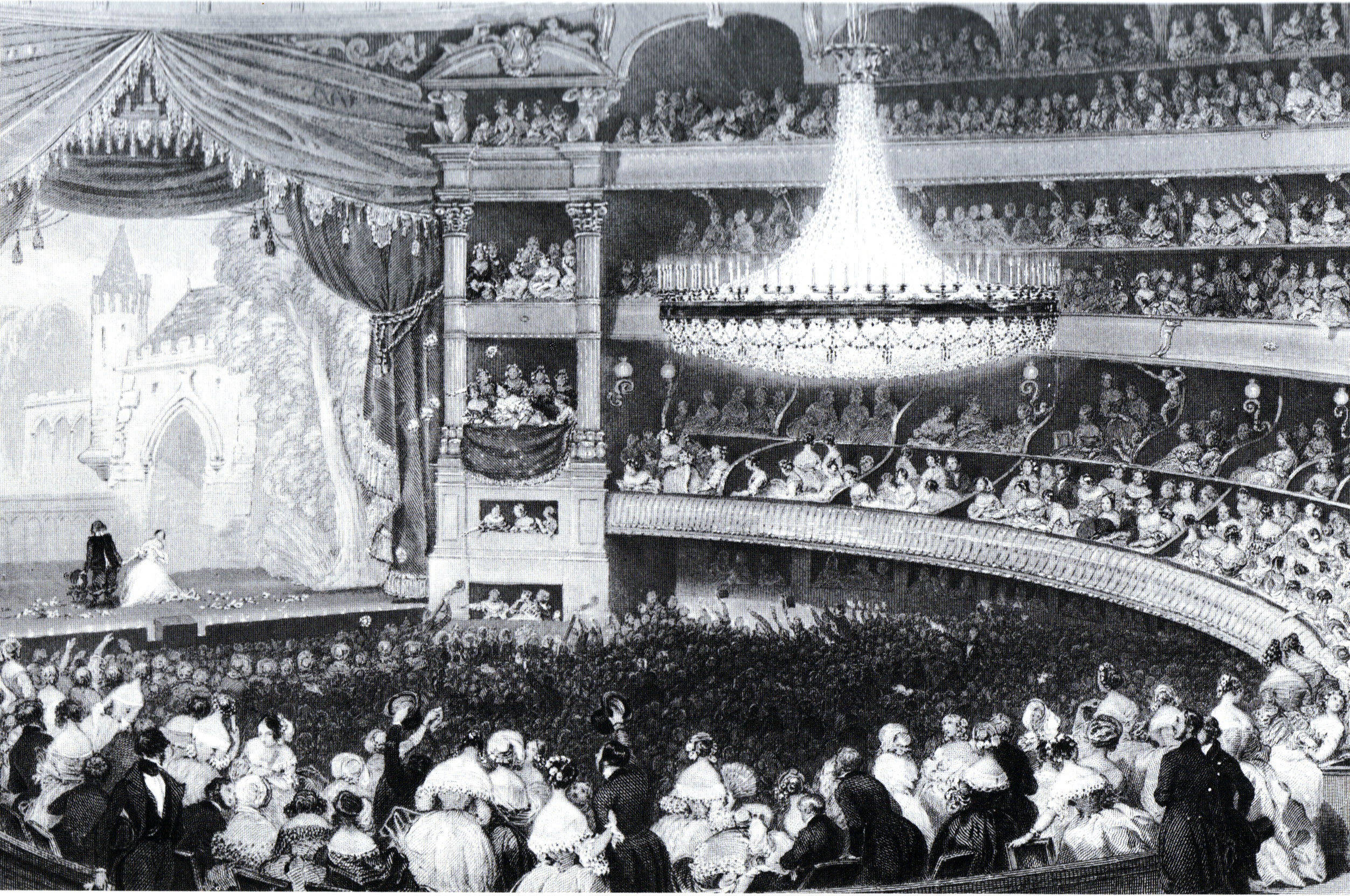
For the French Romantics, theatre tended to be Very Serious Business indeed. The Battle of Hernani was, indeed, the flowering of the Romantic decision that in the debate of whether art reflects, or life reflects art, the answer is 'art is life'.

Certain Romantics were so dedicated to certain performers, plays or ensembles that they reserved the same seats for every performance, every evening at a given venue. For example, at the Théâtre-Italien, Ernest Legouvé reported that there were about sixty or so men of different ages and professions (though mostly lawyers, magistrates and writers), formed a sort of Romantic phalanx whose only law was to never miss a performance. They generally arrived an hour early, to discuss the upcoming performance and compare it with past ones that they had seen, and acted as a sort of jury, leading the rest of the audience in applause or silence.

If someone was so gauche as to start up a round of applause when the Romantic Regulars did not think an actor had merited one, an appointed spokesperson would say, quite sharply, "Is that one of the regulars of the Théâtre-Italien?"

At that point, the applause usually stopped.

Saturday, June 26, 2010

Hauteville House: An Introduction


The Amateur Historian begs the pardon of her Gentle Readers, as she has been on vacation/various geeky trips, i.e. to see Hauteville House on Guernsey. Hauteville House is, as Hugo and his family describe it, a poem in several rooms.

Unfortunately, that poem is one of Hugo's, so the floor plan has been inspired by Dante's Divine Comedy and is full of somber slogans about the transience of mortal existence, punctuated by skulls, Flemish paintings of peasants beating up the aristocracy, the clergy and the army, Orientalist touches like walls lined with unused crockery and Hugo's favorite interior design choice, carpeted ceilings.

According to the Divine Comedy floorplan, the ground floor is hell, full of somber colors, dark wood paneling and very little light. The second floor is purgatory, which is sumptuously and rather ironically decorated in Napoleon III style, full of silk brocades and metallic tapestries (several of which are, in fact, on the ceiling). The third floor and attic are paradise, with enormous windows dominating each room.

It is unclear, at this time, if there is a link between where Hugo placed people's bedrooms and the floors of his house. For example, Hugo's room is up in the attic, where the light streams in, his sons have rooms on the second floor, his wife and daughter have rooms in Purgatory and his poor, belagured secretary's room was on the first. It is quite possible that Hugo was very gently suggesting to M. Vacquerie to find another job; after all, when one's employer kindly reserves one a room in hell, it is rather a lowering experience.

Wednesday, June 9, 2010

An Uncommonly Fun Funeral

If there was one thing that Victor Hugo loved more than himself, it was women. Though a great champion of social justice he was the patron of a number of Parisian brothels. Therefore, during his funeral, the policemen that the French government had brought in to keep the funeral from getting violent were upset that said government wished to shut down all the bars/ billiard rooms/ brothels in honor of Victor Hugo. The government then seemed to realize that Hugo would have wished for the brothels to remain open (some brothels even offered their services for free, in honor of the loss of so great a patron), or, rather, that the riot they wished to avoid would have started if said brothels closed and allowed them to remain open.

They did however, respectfully request all the prostitutes to wear mourning.

FUN FACT: The Place des Vosages, where Hugo spent a significant portion of his adult life used to be called the Place Royale. After the 1848 revolution, the department of Vosages was the first to send their taxes into the republican government, so the government changed the Place Royale to the Place des Vosages. See, good things come out of paying your taxes in a timely fashion!

Sunday, May 16, 2010

Brontë Sisters Power Dolls

In the spirit of the past few posts, discover anew youtube's intriguing interpretation of 19th century literature, in the form of "Brontë Sisters Power Dolls". Never have the gender paradigms of the 19th century publishing industry been so epically or oddly dismantled.

Wednesday, May 12, 2010

I Wandered as Lonely as a Cloud of Opium Fumes

Gentle Readers, please be forewarned that this was an actual, serious tourism video for the Lake Countries of England. Why they decided that a giant squirrel named "MC Nuts" rapping Wordsworth would be the best testament to their attractiveness as a tourist destination is somewhat puzzling. However, as Ponpon from ArmJoe a few days ago taught us, nothing improves 19th century literature like a random animal doing anachronistic things.

Wednesday, April 21, 2010


It is always difficult to smuggle a banned book into a country in which it is banned, particularly when said banned book is Victor Hugo's Napoleon-le-Petit, which was obviously critical of Napoleon III, who exiled the author, and that country is France, ruled by said Napoleon III. Hugo's work reached Paris:

-tucked in barrels of hay
-wrapped around tobacco leaves
-stuffed in carriage clocks
-sandwhiched between two sheets of metal, i.e. as a sardine
-in bundles of pages strapped to the legs of tourists in baggy trousers
-hidden in the bindings of prayer books
-in women's garters

Perhaps the most outlandish method of dissemination reads like something out of Dumas novel, though it comes straight from the French Foreign Office:

"The latest mode of clandestine transmission consists of small balloons fashioned from sheets of printed paper which will be launched whenever the wind stands fair for France."

Thursday, March 11, 2010

Malays were pretty fierce back then it seems


While we are on the subject of opium, it would be remiss of the Amateur Historian not to mention Thomas de Quincey, whose rambling but fascinating narrative Confessions of an English Opium Eater, is not only an intriguing look at addiction, altered states of consciousness, English Romanticism and 18th-19th century England, but a repository of bizarre happenings, such as the Malay Incident. It is best to leave most of the description of this even in de Quincey's own words.

‘One day a Malay knocked on my door. What business could a Malay have to transact among the recesses of the English mountains was not my business to conjecture, but possibly he was on the road to Seaport, about forty miles distant’.

Though the servant girl, 'who had never seen an Asiatic before' was left in mutual bewilderment with the Malay, who spoke English as well as she spoke Malay, de Quincey took it upon himself to see to it that said nameless Malay got a place to stay and something to it. Then de Quincey gave him a parting gift in the form of (you guessed it!) a large lump of opium. de Quincey writes:

‘I was struck with some little consternation when I saw him suddenly raise his hand to his mouth, and bolt the whole, divided into three pieces, at one mouthful. The quantity (of opium) was enough to kill some half-dozen dragoons, together with their horses, supposing neither bipeds nor quadrupeds were trained opium-eaters.'

The Malay was perfectly fine, though de Quincey had highly symbolic nightmares for several pages after that.

Wednesday, March 10, 2010

Bad Romanc...ticism

The Amateur Historian has often thought that Lady Gaga's music videos were best understood under the influence of something and would like to suggest that opium is as good as any- which this delightful music video on Samuel Taylor Coleridge shows perfectly:

Monday, February 8, 2010

Romantic Army on the March off Cliffs!


In belated honor of this blog's one year birthday, have a free opera from Paris! This is Massenet's Werther. Unfortunately the subtitles are in French, but the Amateur Historian would like to point out two scenes of Romantic OTT that need to be seen- 82:16-83:00 where Werther falls to the floor and curls into a fetal position at the loss of Charlotte, and 88:18-30, where Werther jumps off a wall in lieu of any other civilized way of ending a conversation. I highly recommend the opera, which is lovely, musically speaking, and suffers only slightly from being a Romantic work of literature that got reinterpreted into Victorian sentimentalism.

The Amateur Historian adores Romanticism, but is more of Byron's camp than Wordsworth's. The best Romanticism is done with a straight-face, but with tongue firmly in cheek.

Thursday, December 10, 2009

Silly Novels by Silly Lady Novelists

On the subject of scathing reviews, George Elliot, though not as vitriolic about one novel in particular, released her considerable hatred of silly novels in the absolutely brilliant essay "Silly Novels by Silly Lady Novelists". Though the Amateur Historian is not entirely sure if it was intended to do so, the essay also reads like a very good argument for female education. Educate ladies or they, in turn; will write incredibly stupid novels and give all female novelists a bad name.

The Amateur Historian almost wishes to copy-paste the entire thing, but have a few gems before going off to read this masterpiece yourself:

-The heroine's eyes and her wit are both dazzling; her nose and her morals are alike free from any tendency to irregularity.

-The men play a very subordinate part by her side. You are consoled now and then by a hint that they have affairs, which keeps you in mind that the working-day business of the world is somehow being carried on, but ostensibly the final cause of their existence is that they may accompany the heroine on her 'starring' expedition through life.

-The fair writers have evidently never talked to a tradesman except from a carriage window; they have no notion of the working-classes except as 'dependents'; they think five hundred a-year a miserable pittance; Belgravia and 'baronial halls' are their primary truths; and they have no idea of feeling interest in any man who is not at least a great landed proprietor, if not a prime minister. [Watch out Pitt the Younger!] It is clear that they write in elegant boudoirs, with violet-coloured ink and a ruby pen; that they must be entirely indifferent to publishers' accounts, and inexperienced in every form of poverty except poverty of brains.

-Their intellect seems to have the peculiar impartiality of reproducing both what they have seen and heard, and what they have not seen and heard, with equal unfaithfulness.

- We are not surprised to learn that the mother of this infant phenomenon, who exhibits symptoms so alarmingly like those of adolescence repressed by gin, is herself a phoenix... she can talk with perfect correctness in any language except English.

-This enthusiastic young lady, by dint of reading the newspaper to her father, falls in love with the prime minister, who, through the medium of leading articles and "the resumé of the debates," shines upon her imagination as a bright particular star, which has no parallax for her.... Perhaps the words "prime minister" suggest to you a wrinkled or obese sexagenarian; but pray dismiss the image. Lord Rupert Conway has been "called while still almost a youth to the first situation which a subject can hold in the universe," and even leading articles and a resumé of the debates have not conjured up a dream that surpasses the fact. [Either someone has fangirled William Pitt the Younger to an alarming extent and thus either 'forgot' that his emotional life more-or-less stopped developing as soon as he entered office and ignored the fact that he was more-or-less asexual, or they have decided that just any old 24-year-old can be Prime Minister without having a successful Prime Minister for a father, a genius for mathematics and economics, a childhood education structured around the goal of becoming Prime Minister or the extraordinary set of personality-driven power-struggles plaguing the House of Commons that paved Pitt's way to power.]

-(a quote from a novel): "Was this reality?"

Very little like it, certainly.

-He is not only a romantic poet, but a hardened rake and a cynical wit; yet his deep passion for Lady Umfraville has so impoverished his epigrammatic talent, that he cuts an extremely poor figure in conversation. When she rejects him, he rushes into the shrubbery, and rolls himself in the dirt.

-To judge from their writings, there are certain ladies who think that an amazing ignorance, both of science and of life, is the best possible qualification for forming an opinion on the knottiest moral and speculative questions. Apparently, their recipe for solving all such difficulties is something like this:–Take a woman's head, stuff it with a smattering of philosophy and literature chopped small, and with false notions of society baked hard, let it hang over a desk a few hours every day, and serve up hot in feeble English, when not required.

-In such cases, sons are often sulky or fiery, mothers are alternately manoeuvring and waspish, and the portionless young lady often lies awake at night and cries a good deal. We are getting used to these things now, just as we are used to eclipses of the moon, which no longer set us howling and beating tin kettles.

-A recent example of this heavy imbecility is, "Adonijah, a Tale of the Jewish Dispersion," which forms part of a series, "uniting," we are told, "taste, humour, and sound principles." "Adonijah," we presume, exemplifies the tale of "sound principles;" the taste and humour are to be found in other members of the series.

You can read the rest of Eliot's essay here.

Friday, November 20, 2009

Fenimore Cooper's Literary Offenses

There is nothing the Amateur Historian likes more than a scathing review of a ridiculous novel and, though the British Romantics had some doozies, the prize for scathing reviews must go to Mark Twain, for outlining Fenimore Cooper's Literary Offenses, which, alas, were great indeed.

Fenimore Cooper was at the forefront of American Romanticism, whose variation on the return to nature and the exploration of the history of one's nation was an exploration (with varying degrees of success) of colonial days, where one could give blankets full of smallpox to natives so one could build oneself a little Roussean paradise in the now vacant backwoods. Cooper's adventure stories were extremely popular, but, in Mark Twain's opinion, an insult to the reader, to the Native Americans, to literature, to Romanticism, and to the English language itself.

Here are some particular gems:

- [The rules governing literary fiction] require that the personages in a tale shall be alive, except in the case of corpses, and that always the reader shall be able to tell the corpses from the others. But this detail has often been overlooked in the Deerslayer tale.

- [The rules also] require that crass stupidities shall not be played upon the reader as "the craft of the woodsman, the delicate art of the forest," by either the author or the people in the tale. But this rule is persistently violated in the Deerslayer tale.

-Cooper's gift in the way of invention was not a rich endowment; but such as it was he liked to work it, he was pleased with the effects, and indeed he did some quite sweet things with it. In his little box of stage-properties he kept six or eight cunning devices, tricks, artifices for his savages and woodsmen to deceive and circumvent each other with... He prized his broken twig above all the rest of his effects, and worked it the hardest. It is a restful chapter in any book of his when somebody doesn't step on a dry twig and alarm all the reds and whites for two hundred yards around. Every time a Cooper person is in peril, and absolute silence is worth four dollars a minute, he is sure to step on a dry twig. There may be a hundred other handier things to step on, but that wouldn't satisfy Cooper. Cooper requires him to turn out and find a dry twig; and if he can't do it, go and borrow one. In fact, the Leatherstocking Series ought to have been called the Broken Twig Series.

-In the matter of intellect, the difference between a Cooper Indian and the Indian that stands in front of the cigar-shop is not spacious.

-To believe that such talk really ever came out of people's mouths would be to believe that there was a time when time was of no value to a person who thought he had something to say; when it was the custom to spread a two-minute remark out to ten; when a man's mouth was a rolling-mill, and busied itself all day long in turning four-foot pigs of thought into thirty-foot bars of conversational railroad iron by attenuation; when subjects were seldom faithfully stuck to, but the talk wandered all around and arrived nowhere; when conversations consisted mainly of irrelevancies, with here and there a relevancy, a relevancy with an embarrassed look, as not being able to explain how it got there.

-There have been daring people in the world who claimed that Cooper could write English, but they are all dead now.

-. Now I feel sure, deep down in my heart, that Cooper wrote about the poorest English that exists in our language, and that the English of Deerslayer is the very worst that even Cooper ever wrote.

- I may be mistaken, but it does seem to me that Deerslayer is not a work of art in any sense; it does seem to me that it is destitute of every detail that goes to the making of a work of art; in truth, it seems to me that Deerslayer is just simply a literary delirium tremens.

One can read the review here.

Tuesday, September 29, 2009

Hernani: The Play Where the Audience is SUPPOSED to Be More Interesting Than the Actors


The Romantic movement came to France much later than it did to England in Germany, and the backlash was correspondingly more severe. The elements of French culture that proved resistant to Romanticism, i.e. the Academie Francaise, and the wide-spread use and popularity of classical form, also proved extremely reactionary, as could be seen on Feb. 25, 1830, when a young Victor Hugo decided to stage a play.

Victor Hugo, who is pretty much The Romantic of the French Romantic movement, broke with tradition when he wrote Hernani, a play that can be summed up as, "Oops, I am in love with someone who is in love with/engaged to someone else and now I have killed myself for no easily discernable reason." Though the main cast was dead in the end, as happens with most French tragedy, Hugo made the great mistake of using forbidden words such as "handkerchief" and forcing the actors to express grand sweeps of Romantic passion while in period costume. One actress was so appalled by her period costume she refused to go onstage without wearing her contemporary but hideous 1830s hat. Since the Comedie Francaise, i.e. the Maison de Moliere, i.e. the oldest theatre company in Europe, i.e. The Be All and End All of French Drama, was deigning to stage a (gasp) Romantic piece, Hugo was understandably nervous about its reception. He therefore passed out red tickets (normally given to the author of any staged drama, like a courtesy copy of a book) to his friends, who formed a Romantic Army and invaded the Comedie Francaise on the opening night.

To make sure the production would begin on time and sans interference from the classicists, the Romantic Army got to the building at three-o-clock and locked themselves in for the next four hours with provisions and their cosplay get-up (Seriously, Hugo himself describes the Romantic Army as full of "wild whimsical characters, bearded, long-haired, dressed in every fashion except the reigning one, in pea-jackets, Spanish cloaks, in waistcoats a la Robespierre, in Henry III bonnets...and this in the middle of Paris in broad daylight"). Sometime before seven-o-clock, they realized that they had no bathrooms, as they had locked themselves into the auditorium, and just did their business in the boxes of the classicists.

The classicists were understandably pissy (in all senses of the word, thanks to the lack of bathrooms) and began having fistfights in the pit. The actors, already unhappy with having to go Romantic and forsake their 1830s habberdashery, were made further unhappy by the fact that they could not get through a single performance without someone in the audience :
a. challenging someone else to a duel,
b. starting a fistfight,
c. hissing at the stage loud enough to drown out the actors,
d. arguing over classical vs. Romantic forms and politics very, very loudly, or
e. getting up onstage in a red waistcoat and lime green pants before the curtain to sing praises of the Romantic, bohemian lifestyle. (Not like that, though. More the songs of angry men.)

Hernani ran for a hundred full-house performances. The Amateur Historian is willing to bet that the actors of the Comedie Francaise hated every one of them.