
Hello, Gentle Readers! The Amateur Historian has not reviewed anything pertaining to the time period mentioned in the header for a while, and so recently rented Christopher Nolan's The Prestige. This film, staring Hugh Jackman and Christian Bale as rival magicians during the end of the 19th century, in London, is a spooky, but stunning look at stage magic that somehow turns into a distrubing sci-fi story about a magician abusing the scientific powers of Nicola Tesla.
... yes, Gentle Reader, you read that correctly.
Now, from an aesthetic standpoint, the Amateur Historian beileves that one really cannot go wrong with any story that involves Hugh Jackman in period attire and yet... hm. Gentle Readers should be warned that the film is extremely bloody. One realizes that there is a great deal of danger involved in near-death escapes, but one does not really internalize it. The main conflict between the two magicians, Robert Angier (played by Hugh Jackman) and Alfred Borden, (played by Christian Bale) begins when the two work as audience plants for another magician's show. Angier's wife plays the pretty assistant to the magician, you know, the one who is generally sawed in half, or dropped into a tank of water with her arms and legs tied up. Unfortunately, due to Bordon, the tank of water trick ends in very violent tragedy, and, in a show of machismo, revenge and I think pathological obession, Angier and Borden keep trying to one-up each other to increasingly dangerous ends.
Theeeeeeeeeeeeeeeeeeen the movie gets weird.
Perviously, Angier had worked with Michael Caine's character to come up with tricks, but, after recieving a mysterious clue on how to do the "Disappearing Man" trick, he jaunts off to the US to meet with, you guessed it, NICOLA TESLA.
I have nothing against Tesla, and I think the choice of David Bowie to play Tesla was nothing short of genius, but seriously, electricity can only do so much. I don't know if it was part of the book orginally, but I somehow doubt if electricity, wether AC or DC can clone hats, cats or Wolverines. Apparently it does. Who knew? Maybe Edison had something on Tesla being a danger to society.
The main problem with the film is that it veers off genre without any real set-up for it. It appears to be a very bloody look at the end of century, Alaistar Crowley sort of magic, where the veneer of civilization is but a veneer, and the darkness and wolfish nature of man is always rearing its Lockean head to show us we are rather nasty brutes after all. Then it turns out to be about clones.
Yeah.
The other problem is the Amateur Historian's own sense of aesthetics. The Amateur Historican has never been one for the gothic, prefers Austen to Bronte, and Voltaire to Locke. Thus, a film that takes the view of a brutish humanity is not likely to please. However, if one enjoys horror, or enjoyed the film Gothic in an unironic manner, one is likely to enjoy this film.
Friday, June 3, 2011

Wednesday, May 4, 2011
Tuesday, May 3, 2011
Monday, May 2, 2011
Sunday, May 1, 2011
Friday, April 29, 2011
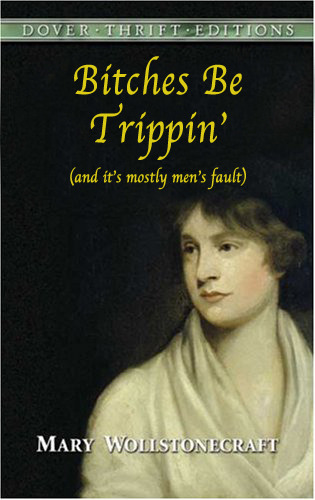
Thursday, April 28, 2011
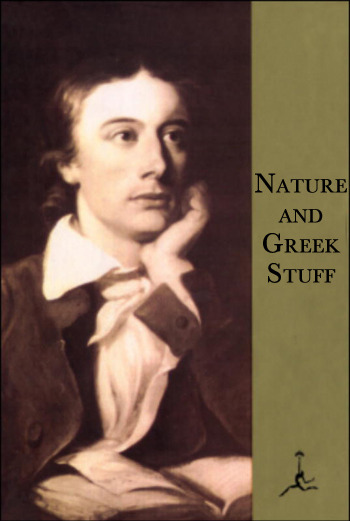
Wednesday, April 27, 2011
Better Book Title!
The true meaning of The Age of Innocence:

(From Better Book Titles: www.http://betterbooktitles.com)
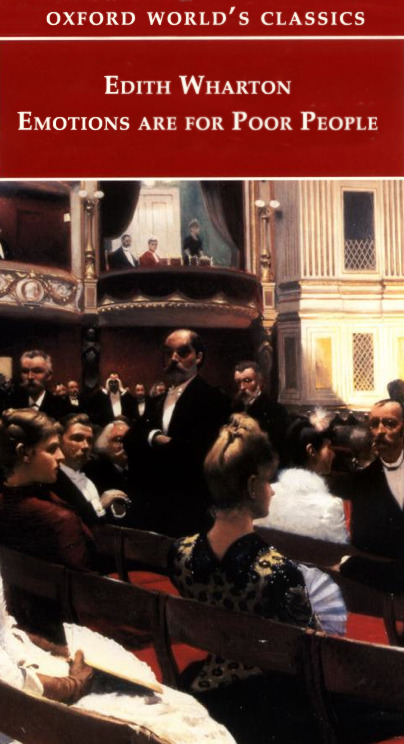
(From Better Book Titles: www.http://betterbooktitles.com)
Tuesday, April 26, 2011
Oeuf!

The Marquis de Condorcet was widely held to be a philosophe and one of the last members of the Enlightenment. However, that did not keep him from moments of great stupidity.
While in hiding during the Terror, Condorcet, wounded in the leg and disheveled, ordered an omlette in an inn.
"How many eggs would you like?" asked the inn-keeper, somewhat alarmed by his guest's wild appearance.
Condorcet, being an aristocrat, had no idea, and thus said, "Twelve."
The inn-keeper then realized he was an aristocrat on the run, and reported him to the authorities.
Condorcet certainly had egg on his face for that one.
(Get the title? It's a pun! Oof/oeuf? They sound the same, but one is the French word for egg?Fine, Gentle Reader, you simply do not posses the sophisticated appreciation of wordplay that the Amateur Historian does.)
They had to earn their keep somehow...

The British response to French émigrés fleeing to their shores was mixed at best. Burke was very much sympathetic to the émigré population, in particular to the segment of the population set on armed overthrow of the French Revolutionary government. Pitt was officially neutral, as he was up until the point where the French government declared war on Great Britain, but his later refusal to support émigré armies and his cabinet's Alien Laws preventing any French republicans from coming to England, and the banning of speakers, visitors and speakers suggest that Pitt was not altogether keen on increasing the French percentage of the population.
By far the oddest reaction to the French émigrés was that of the Duke of Bridgewater, he of the famous canals, who, Madame de Stael reports, rescued what seems to be an abbey's worth of monks for the purpose of having them wander through his gardens. It certainly beats having a Weeping Angel entertaining your neighbors at a garden party.
Subscribe to:
Posts (Atom)