
Showing posts with label Opera. Show all posts
Showing posts with label Opera. Show all posts
Thursday, October 14, 2010
Mozart l'Opéra Rock: Roll Over Beethoveen, Mozart Needs the Extra Room to Spin
Though the Amateur Historian is very fond of French opera, she must confess herself confused by this latest work adorning the French stage. Mozart l'Opera Rock is, you guessed it, a rock opera about Mozart. The action of the play seems to be loosely based on the play Amadeus. This rock opera is a rich mine of absurdity, but the Amateur Historian would like to pull out this particular gem for her Gentle Readers. In this song, 'L'Assasymphonie', Salieri develops a suicide wish after hearing The Marriage of Figaro and proceeds to sing about it and to try and cut his wrists with a conductor's baton.
The Amateur Historian's favorite moment, however, is the highly symbolic one around 3:40 where Salieri, unable to contain his emotions to mere words or melody, makes a noise like a dying pterodactyl.

Wednesday, June 30, 2010
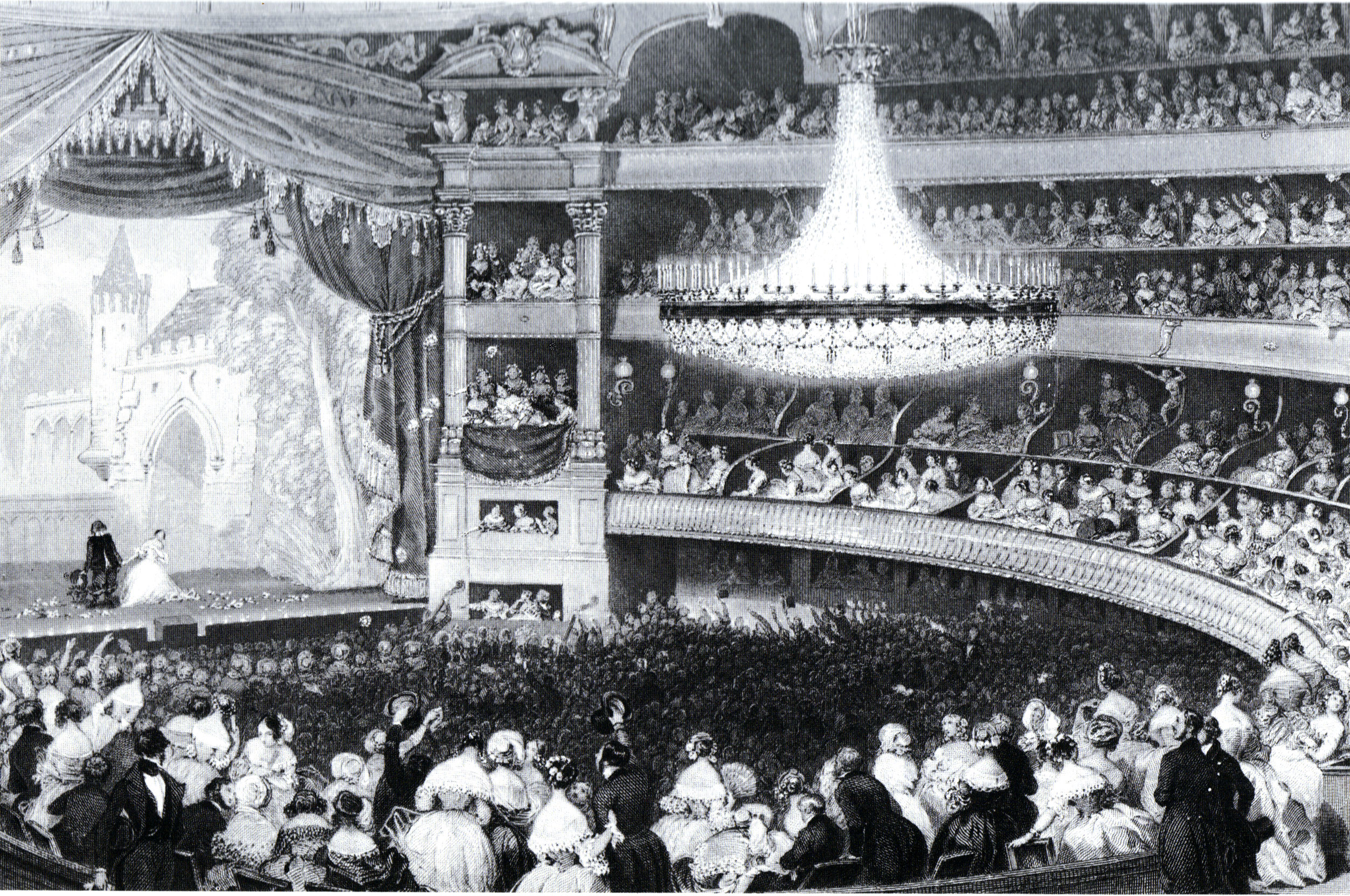
For the French Romantics, theatre tended to be Very Serious Business indeed. The Battle of Hernani was, indeed, the flowering of the Romantic decision that in the debate of whether art reflects, or life reflects art, the answer is 'art is life'.
Certain Romantics were so dedicated to certain performers, plays or ensembles that they reserved the same seats for every performance, every evening at a given venue. For example, at the Théâtre-Italien, Ernest Legouvé reported that there were about sixty or so men of different ages and professions (though mostly lawyers, magistrates and writers), formed a sort of Romantic phalanx whose only law was to never miss a performance. They generally arrived an hour early, to discuss the upcoming performance and compare it with past ones that they had seen, and acted as a sort of jury, leading the rest of the audience in applause or silence.
If someone was so gauche as to start up a round of applause when the Romantic Regulars did not think an actor had merited one, an appointed spokesperson would say, quite sharply, "Is that one of the regulars of the Théâtre-Italien?"
At that point, the applause usually stopped.
Monday, February 8, 2010
Romantic Army on the March off Cliffs!
In belated honor of this blog's one year birthday, have a free opera from Paris! This is Massenet's Werther. Unfortunately the subtitles are in French, but the Amateur Historian would like to point out two scenes of Romantic OTT that need to be seen- 82:16-83:00 where Werther falls to the floor and curls into a fetal position at the loss of Charlotte, and 88:18-30, where Werther jumps off a wall in lieu of any other civilized way of ending a conversation. I highly recommend the opera, which is lovely, musically speaking, and suffers only slightly from being a Romantic work of literature that got reinterpreted into Victorian sentimentalism.
The Amateur Historian adores Romanticism, but is more of Byron's camp than Wordsworth's. The best Romanticism is done with a straight-face, but with tongue firmly in cheek.
Wednesday, November 11, 2009
The Style Napoleon III

The Amateur Historian is not a fan of the Opera Garnier, which, in the Amateur Historian's humble opinion, looks as if the Baroque Era ate a bit of Romanticism that disagreed with it, then puked it up in the form of a building, then got so ashamed of what it had done, it kept flinging gold leaf, drapes, tassels, mirrors, tapestries and paintings at its mess. The Empress Eugenie, the wife of Emperor Napoleon III, during whose reign the Opera Garnier was first commissioned, did not like the building either.
When Garnier first submitted the designs for the Opera, the Empress looked at the bizarre Versailles-gone-so-froo-froo-wild-on-a-gold-leaf-bender plan and demanded what the building's style was supposed to be.
Garnier, looking at the Emperor, replied, "The style Napoleon III."
Needless to say, his design won.
Subscribe to:
Posts (Atom)